


The right answer for your home, though, depends on how each bathroom is actually used. Here is how the two compare, and how to decide.

- Bathroom
- Kitchen
- Inspiration
- Care
- About Us
- Enquiries

What Is a Mixer Faucet?
A mixer faucet blends hot and cold water inside a single body, so one spout delivers water at exactly the temperature you want. Most modern basin mixers use a single lever: lift for flow, swivel for temperature. No juggling two separate taps to find a comfortable warm.
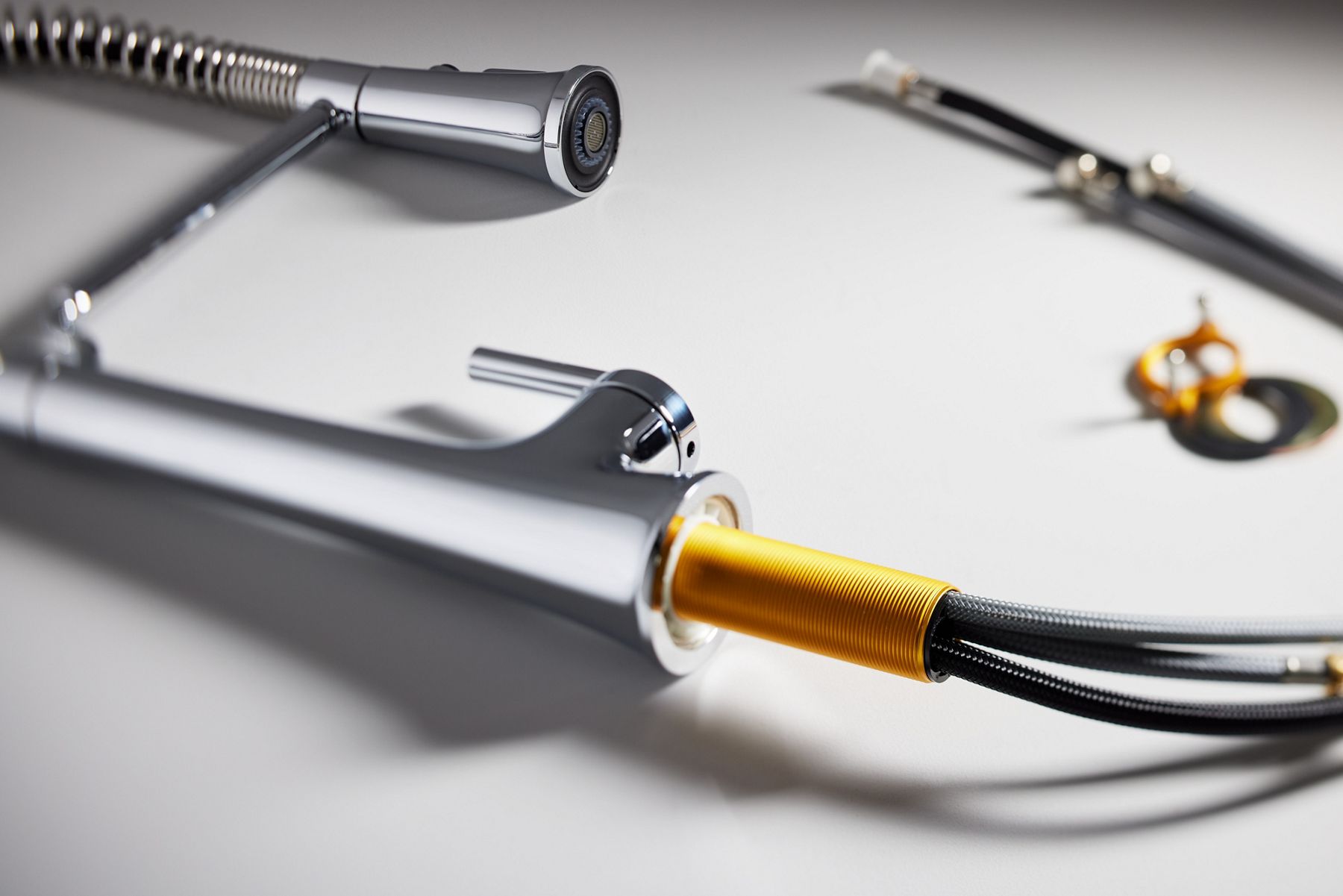
Inside, a ceramic disc cartridge does the blending. It is the reason a good mixer feels smooth for years, and why KOHLER mixers are engineered to exceed industry longevity standards. Design is where mixers stretch their lead. The KOHLER July single-control faucet keeps things quietly contemporary in Polished Chrome, Brushed Nickel or French Gold, while the KOHLER Stance tall single-control faucet pairs an architectural spout with a joystick handle for vessel basins.
What Is a Sensor Faucet?
A sensor faucet runs without handles. An infrared or proximity sensor detects your hands beneath the spout, signals a valve to open, and shuts the water off the moment you step away. You never touch the faucet, which is precisely the point: nothing to grip with soapy hands, nothing for the whole household to leave germs on.
The KOHLER Components touchless faucet uses Kinesis sensor technology, which responds more reliably than conventional infrared sensors, and flows at a measured 1.9 litres per minute. A wall-mount version keeps the basin deck completely clear.
One detail most comparisons skip: residential sensor basin faucets, including these, are typically plumbed for cold water only. That single fact settles the debate for many buyers, and we will come back to it.
Mixer Faucet vs Sensor Faucet: The Key Differences
Temperature control
Mixers win outright. A lever gives you the full range from cold to hot in one motion. Standard sensor basin faucets dispense cold water only, so a warm-water handwash is off the table unless you add a mixing arrangement upstream.
Hygiene
Sensor faucets win. Zero contact means the faucet never becomes the germiest object in the bathroom. In a guest washroom or a home with young children, that matters daily.
Water use
Sensor faucets have the edge. Water flows only while your hands are under the spout, and a regulated 1.9 lpm flow rules out the tap left running while someone brushes. A mixer relies on the user remembering to close it.
Power
Mixers need none. Sensor faucets need a DC or battery supply, a fair trade for the convenience, but something to plan for.
Installation
Mixers need both hot and cold lines at the basin. Sensor faucets need a single supply plus power, and any experienced plumber can fit a mixer, while sensor models benefit from brand-trained installation.
Maintenance
A quality mixer cartridge runs for years untouched. Sensor faucets ask a little more: periodic battery changes and an occasional sensor wipe-down.
Which Should You Choose?
Choose a mixer faucet if your family uses warm water at the basin, you want zero dependence on power, you prefer a wider spread of designs and finishes, or the bathroom is a master or family bathroom used many times a day by people who close taps behind them.
Choose a sensor faucet if hygiene is the priority, the basin serves guests or heavy traffic, you want water savings built into the hardware rather than left to habit, or you simply want the quiet delight of water that appears when you do.
What About Cost of Ownership?
A sensor faucet costs more upfront than a comparable mixer, and batteries add a small recurring expense. Against that, it saves water on every single use, which compounds meaningfully in a busy washroom. A mixer costs less to buy and nothing to power, with its long-term cost limited to an eventual cartridge service. Over a decade, a well-made example of either is inexpensive to own. The real cost is buying poorly made versions of either and replacing them twice.
Sensor Taps in Indian Homes: What to Check First
Water pressure
Sensor valves need a minimum working pressure. Gravity-fed supply from an overhead tank on a low floor may fall short, so check the model's pressure rating or ask your plumber to measure.
Hard water
In hard-water cities, aerators and sensors appreciate a periodic clean. A simple inline filter protects the valve.
Power cuts
DC and battery-powered models keep working through outages, so a power cut does not mean a dry basin.
Hot water supply
Confirm whether the model is cold-only before committing it to a bathroom where warm handwashing is expected.
Servicing
Choose a brand with a real service network. A sensor faucet is a small piece of engineering, and it deserves an engineer when something needs attention.
The Best of Both Worlds
The most considered homes do not pick a side. They place each faucet where it earns its keep: a Components touchless faucet in the guest powder room, where hygiene and a moment of quiet theatre greet every visitor, and July or Stance mixers in the family bathrooms, where warm water and everyday robustness come first.
The nicest way to decide is to try both. Wave a hand under a sensor faucet, feel the weight of a mixer lever, and compare finishes side by side at a Kohler Experience Centre near you. Prefer to start from your sofa? The Kohler Concierge on WhatsApp can help you shortlist models for each bathroom.

